

A Beginner's Guide to Dehydrating Fruit
Food preservation can get honest so deep. Food can be preserved in a variety of way but one process is king when it comes to keeping food stored for a long time. Drying food is a simple process but there are certain steps when it comes to dehydration that will make the process easier. If you don’t feel like reading, you can scroll down and follow the recipe below. Feel free to let us know if you have any questions. I will be more than happy to answer any questions you have!
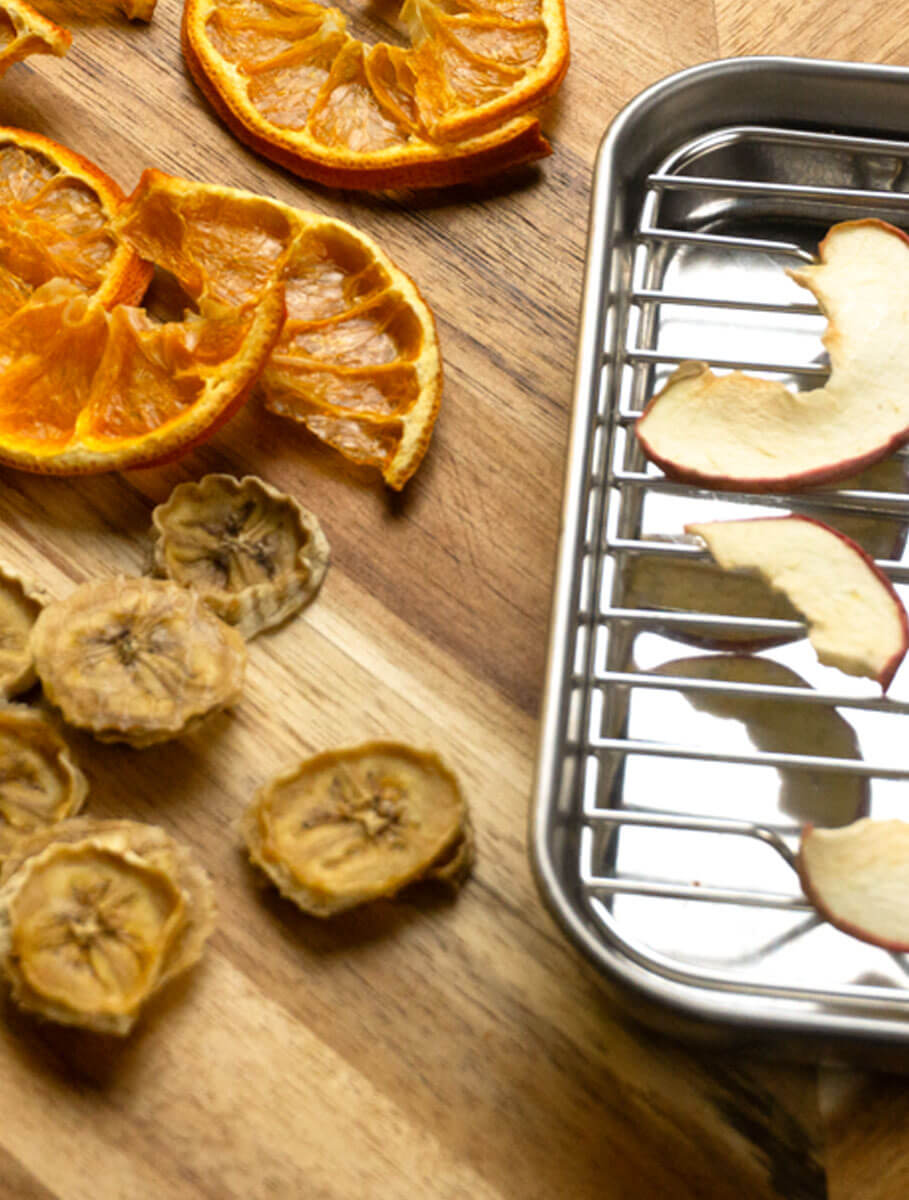
Dehydrating fruit is a simple process that takes several hours to complete. You can use dried fruits for snacks, baking, brewing, and cooking recipes all year long without worrying about them going bad in the fridge. Depending on if you want to make completely dry crisp fruit or fruit leather this can take anywhere between 6 and 30 hours depending on the temperature. You can dehydrate just about any fruit but certain types will become more or less dehydrated depending on the juiciness of the fruit. This tutorial will discuss the method for dehydrating fruit using both a dehydrator and for those of you who don’t want a massive appliance taking up space, an oven.
Equipment Needed
This can be done in the oven, an air fryer (depending on how low it can go) or even in the sun (Depending on conditions) but obviously the best way to go about doing this is to get an actual dehydrator. The reason for this comes down to environmental control. When drying in a the sun, you are at mercy of nature whereas in a dehydrator, you are able to optimize the environment to speed up the process. Now you might be asking yourself how you can justify getting an appliance with one use, there is no doubt that dehydrating is not for everyone but dehydrating is not limited to just fruits. You can dehydrate fruits, leathers, herbs, meats, and depending on the capacity of your dehydrator culture yogurts and breads. Buying a dehydrator doesn’t have to cost a fortune, you can buy a brand new low end dehydrator for about $40 like this one or just take a look at Facebook marketplace. Depending on your area, you may find several high end dehydrators for sale.
Selecting the Right Fruit
You should be looking for slightly over ripe fruit. Drying fruit that is over or under ripe will not improve its flavor any so make sure you are selecting good quality fruit.
Prepping The Fruit
For certain types of fruit, especially berries, it is important to check the skins. Since fruit like blueberries are mostly water, splitting the skin by piercing them, briefly boiling them, or even freezing them will split their skins allowing water to escape faster. Also, keep in mind If you are dehydrating cherries, make sure to take out the pit. It should go without saying, make sure to wash and dispose of decaying fruit before dehydrating. This removes any fruit that can affect all the fruit that is being dried.
Another step that will help in the drying process is to pretreat the fruit in an acidic solution like 1 cup of lemon juice to 1 cup of water for about 10 minutes so a 1:1 ratio. Another product that can be used here is 1 teaspoon citric acid to 1 quart of water. Citric acid can be found in the canning section of your local supermarket. This helps to speed up the rate of drying of certain types of fruits with tough skins. It also helps to keep the skins from darkening. While this step is not totally necessary, it is recommended.
Drying The Fruit
Arrange the fruit in a single layer of an oven or dehydrator. If you are using an oven, you can arrange them on a wire rack. If the fruit is too small and wants to fall through the slots, you can use parchment paper. Placing them on parchment paper may increase drying time. Cook them at 140°F (60°C) for at least 6 hours. Depending on the fruit it can take up to. Cherries and blueberries can taken between 24 and 36 hours whereas bananas can take up to 20 hours to get completely dry.
If you are unsure if your fruit is dry or not you can try a few. If you can still feel liquid, they are not dried enough. It is normal for fruit like bananas to be leathery even past 12 hours. If 100% dry is what you are after, return it to the dehydrator until it is hard enough. You are just trying them to make sure they are not sticky or wet.
Take the fruit out and allow it to cool completely before storing. A good way of knowing if your fruit is dehydrated or not is while they are still warm place them in an air tight bag. If you notice moisture on the inside of the bag they are not dry enough.
It is recommended that you condition your fruit for 7 to 10 days. After cooling them completely, place them in a bag or airtight container and store in a warm, dry, well ventilated place. Stir or shake the containers daily to separate pieces. If you notice moisture build up on the inside of the container, return them to the dehydrator for further drying
Storing Dehydrated Fruits
Store the cooled dry fruit in an air tight container and store in a cool dry area, in the refrigerator, or freezer. Properly stored fruit can last for up to a year